
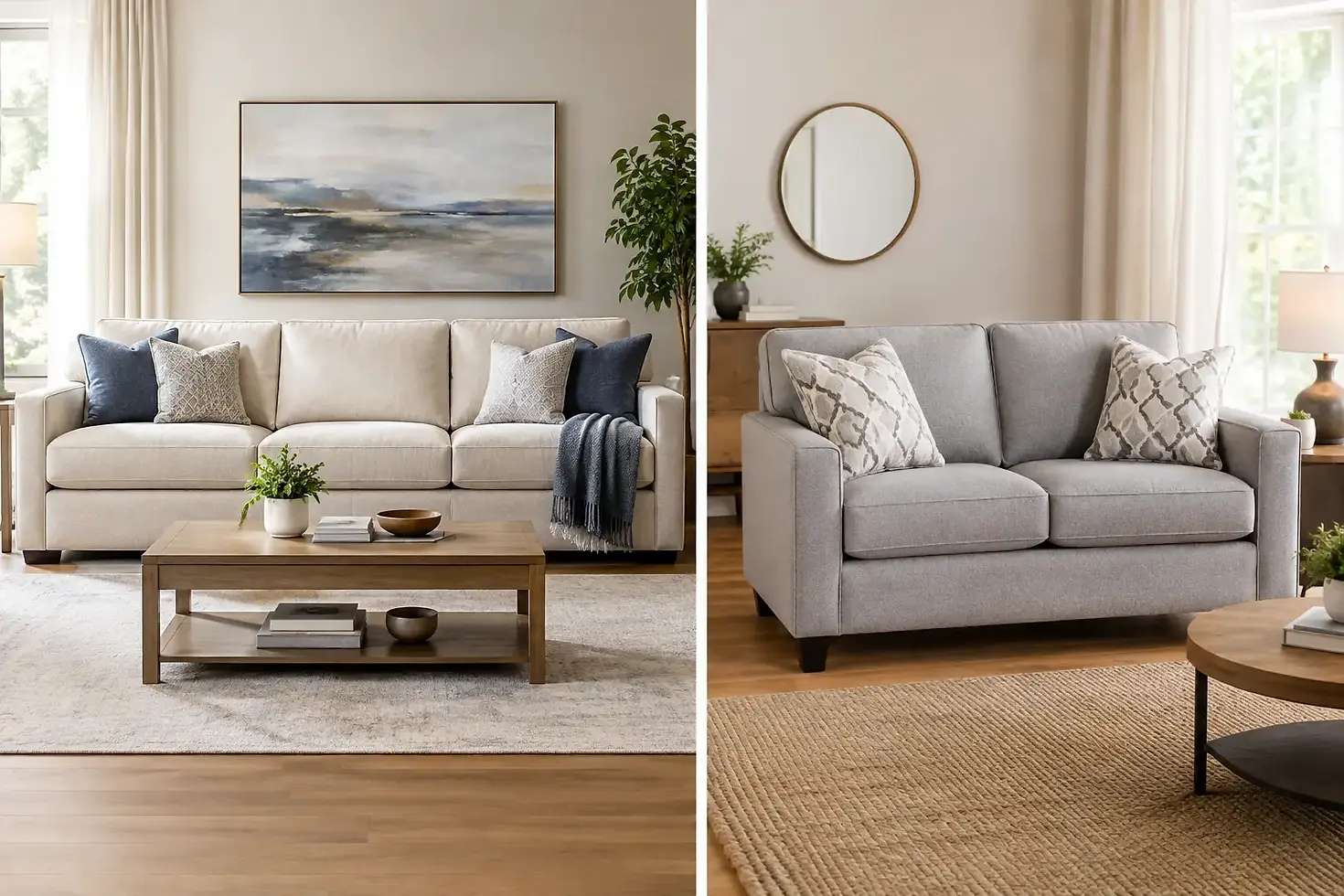
Sofa Versus Loveseat: Which Fits Your Home?
A living room can look beautifully furnished on paper and still feel crowded, incomplete, or awkward once the seating arrives. That is why the sofa versus loveseat decision deserves more thought than simply choosing the piece that fits the open spot on the floor. The right choice shapes how your household relaxes, hosts friends, watches the game, and enjoys everyday time at home.
A sofa offers generous seating and makes a clear statement in a room. A loveseat brings intimacy, flexibility, and often a welcome amount of breathing room. Neither is automatically better. The best fit depends on your layout, how many people use the space, and the kind of home life you want to create.
Sofa Versus Loveseat: Start With How You Live
Before measuring walls or comparing fabrics, consider what happens in the room on an ordinary weeknight. If it is the place where the family spreads out for movies, where pets claim their favorite cushion, or where guests naturally gather during a game night, a sofa is usually the stronger foundation. Most standard sofas seat three people comfortably, with room for someone to stretch out after a long day.
A loveseat is designed for two, but its value is not limited to smaller households. It can create a cozy conversation area in a bedroom, home office, loft, or finished basement. It is also a smart choice for couples who prefer a more open living room and do not need to seat a crowd every evening.
Think about entertaining honestly, not aspirationally. If you host holiday gatherings, neighborhood get-togethers, or family movie nights often, a loveseat alone may leave guests searching for extra chairs. If your home is mostly a retreat for one or two people, a large sofa can take up visual and physical space without adding much day-to-day benefit.
Measure the Room, Then Measure the Path In
Scale is where many furniture decisions go wrong. A piece can technically fit within a room's dimensions and still make the room feel tight. In general, sofas range from about 72 to 96 inches wide, while loveseats commonly fall between 48 and 72 inches. Exact dimensions vary, especially with deep-seat, reclining, or sectional-inspired designs.
Leave enough space to walk comfortably around the seating area. A good rule is to preserve roughly 30 to 36 inches for primary walkways when the layout allows. Also consider the coffee table. You want it close enough to reach a drink or remote, usually about 16 to 18 inches from the seat, without forcing people to squeeze through the room.
The delivery route matters just as much as the floor plan. Measure doorways, stairwells, elevator openings, and tight turns before falling in love with an oversized sofa. Denver homes come in every shape, from historic bungalows with narrow entries to newer townhomes with stairs between living levels. A loveseat may be easier to move, but many full-size sofas can still work when dimensions are planned carefully.
When a Sofa Makes the Most Sense
A sofa is often the anchor of a primary living room because it gives the space a natural center of gravity. It works especially well when the room has one main seating zone and you want it to feel welcoming rather than pieced together. A sofa paired with one or two accent chairs can accommodate a family without making everyone sit in a straight line.
Choose a sofa when comfort for several people is the priority. Families with children, frequent hosts, and anyone who enjoys lounging will appreciate the extra width. A sofa also creates a polished backdrop for pillows, throws, and a coffee table, allowing you to show more of your personal style without adding excess furniture.
That said, bigger is not always more luxurious. An overstuffed sofa in a compact room can make the entire space feel less comfortable. If you need to walk around it sideways or it blocks the view to a fireplace, window, or television, its size is working against the room.
Consider your seating depth
Width gets most of the attention, but depth changes the experience. Deep sofas are wonderful for sinking in during a movie, yet they can be less comfortable for shorter guests or for people who prefer to sit upright. A more tailored sofa with a moderate depth can keep a smaller room looking crisp while still feeling inviting.
When a Loveseat Is the Better Choice
A loveseat earns its place when flexibility matters. In a smaller apartment, condo, or narrow living room, it can provide comfortable seating without asking the room to do too much. It also leaves space for a lounge chair, ottoman, side table, or storage piece that may better suit your routine.
Loveseats shine in secondary spaces. Picture one at the end of a bed, beside a game room pool table, in a den, or near a sunny window where you enjoy coffee and conversation. These areas do not always need the footprint of a full sofa, but they benefit from a seat that feels more intentional than a pair of occasional chairs.
They can also solve an awkward layout. A loveseat placed perpendicular to a sofa can define a conversation area in an open-concept home. Two matching loveseats facing each other create a balanced, welcoming arrangement for entertaining, particularly in a square room where a long sofa would dominate one wall.
The trade-off is obvious: a loveseat has limited capacity. If it is your only upholstered seating and more than two people regularly use the room, plan for supportive accent chairs or a generous ottoman. Otherwise, the room may look great but fail the first time friends come over to watch a Broncos game.
Build a Layout Around Conversation, Not Just the TV
Television placement is practical, but it should not be the only force behind your furniture plan. Arrange seats so people can talk without twisting their necks or shouting across the room. A sofa facing two chairs, or a sofa paired with a loveseat at a right angle, gives everyone a natural connection while keeping the screen visible.
In a long, narrow room, a sofa along the longest wall may be the cleanest choice. In a wider room, a loveseat can help break up empty space and create separate zones. This is especially useful in homes where the living area shares space with dining or recreation. The goal is to make each area feel purposeful without closing it off.
If you are considering a sofa and loveseat set, avoid buying by formula. Matching pieces can look cohesive, but identical large upholstery can make a modest room feel heavy. A sofa in a neutral fabric with a complementary loveseat, chair, or accent seating often creates more depth and personality.
Choose a Style That Will Still Feel Right Later
The sofa or loveseat silhouette affects the mood of the room as much as its size. Clean lines and raised legs can make a compact space feel lighter. Rolled arms and plush cushions offer a more traditional, relaxed feel. Low-profile designs suit modern interiors, while reclining options prioritize laid-back comfort for media rooms and casual family spaces.
Fabric deserves the same care. Performance upholstery is a practical option for homes with kids, pets, and frequent guests. Leather can bring warmth and a refined look while often becoming more characterful with use. Lighter colors can open up a room, though a medium tone or subtle texture may be easier to live with in a busy household.
Rather than chasing a short-lived trend, choose a frame and scale you will enjoy for years. Color and personality can always come through in pillows, art, rugs, and throws. Your main seating should support the way you live now while giving you room to refresh the look later.
Make the Choice Feel Personal
There is no prize for choosing the largest piece or the most symmetrical layout. A sofa is the right answer when your home needs generous, everyday seating. A loveseat is the right answer when you want flexibility, a cozier feel, or a better balance of open floor space and comfort.
At 5280 Furniture Direct, we believe furniture should make it easier to enjoy your home, whether that means stretching out after a busy day or making room for the people you love to have over. Bring your room measurements, a few photos, and an honest picture of how you use the space. The piece that feels right will be the one that invites you to stay awhile.


Comments