
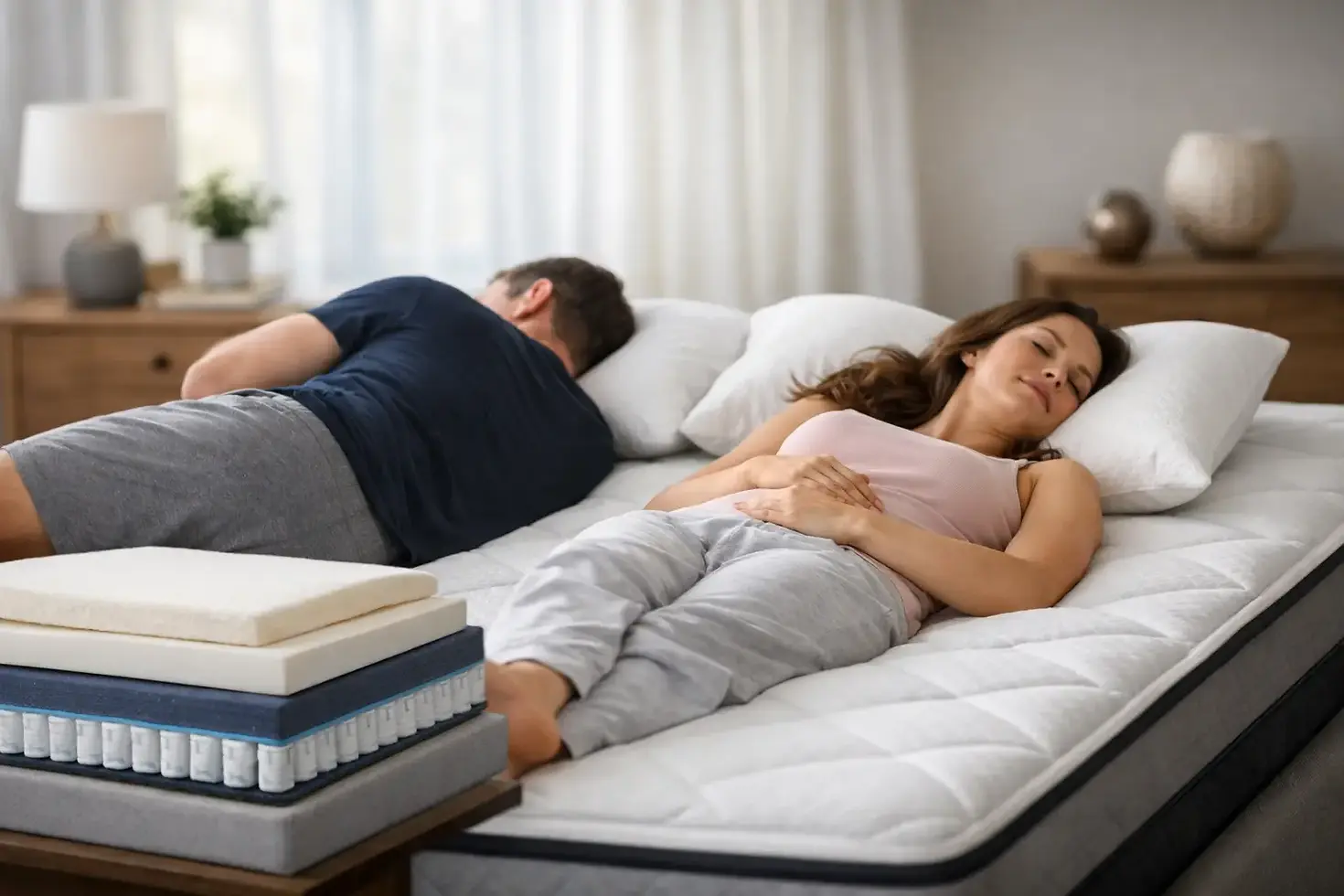
Best Mattress Types for Couples Who Sleep Differently
One person falls asleep in minutes while the other tosses, turns, and checks the clock. One sleeps warm, the other reaches for an extra blanket. Choosing the best mattress types couples can share is less about finding a universally “perfect” bed and more about finding one that respects both people’s routines, comfort needs, and personal space.
For Denver-area households, a mattress is also a meaningful home investment. It supports the quiet parts of daily life: early work mornings, weekend sleep-ins, family movie nights, and the recovery time that helps you enjoy the home you have worked hard to create. The right choice should feel inviting at bedtime and dependable long after the showroom visit.
What Couples Should Prioritize Before Mattress Shopping
Couples often come in looking for firmness first, but firmness alone rarely tells the whole story. A mattress can feel wonderfully plush in the store and still be a poor match if it transfers every movement across the bed. It can feel supportive at first, yet retain too much heat for someone who sleeps warm.
Start by discussing the issues that interrupt sleep now. If one partner wakes when the other gets up, motion isolation should lead the conversation. If one person has shoulder discomfort and the other needs a sturdier feel through the lower back, pressure relief and support need to work together. If you have very different body sizes or sleep positions, consider a mattress with a more responsive surface and strong edge support.
Size matters more than many couples expect. A queen works well in many bedrooms, but a king gives each sleeper substantially more room to change positions without disturbing the other. For couples sharing the bed with a child, pet, or an occasional pile of Sunday-morning pillows, that added space can make a real difference. Measure the room before deciding, including walking clearance around the bed and the path for delivery.
Best Mattress Types for Couples: How Each One Feels
No mattress material wins for every couple. Each category brings clear strengths, along with a few trade-offs worth considering before you commit.
Memory Foam: Excellent for Motion Control
Memory foam is a popular choice when one partner is a light sleeper. Its contouring feel absorbs movement well, so a late bedtime, an early alarm, or a trip to the kitchen is less likely to ripple across the mattress. It also cushions pressure points, which can be especially appealing for side sleepers who feel pressure at the shoulders and hips.
The trade-off is responsiveness. Some sleepers enjoy the cradled feeling, while others feel it takes extra effort to change positions. Traditional foam can also sleep warmer, although many modern options use cooling covers, gel-infused foams, or breathable construction to improve airflow. Couples who want a quieter, less disruptive sleep surface often find memory foam especially appealing.
Innerspring: Supportive and Breathable
Traditional innerspring mattresses have a familiar, buoyant feel. The coil system allows more airflow than dense foam, which can help sleepers who tend to run warm. They are also generally easier to move around on, making them a comfortable choice for people who change positions frequently or prefer not to feel deeply nestled into the bed.
For couples, the key is coil quality and construction. A basic connected-coil mattress may pass more movement from one side to the other. Individually wrapped coils are a better fit for partners because each coil responds more independently, helping reduce motion transfer while maintaining support. Look for a well-padded comfort layer if either sleeper needs additional pressure relief.
Hybrid: A Balanced Choice for Different Sleep Styles
A hybrid mattress combines foam comfort layers with an individually wrapped coil base. For many couples, that balance makes it one of the easiest categories to shop. You get the pressure relief and motion control associated with foam, plus the support, airflow, and responsiveness of coils.
Hybrids work particularly well when partners have different preferences but want to avoid an extreme feel. A side sleeper may appreciate the cushioning at the shoulders, while a back or stomach sleeper may value the steadier support underneath. Quality varies widely, so take time to notice whether the mattress keeps your spine comfortably aligned rather than focusing only on its first-impression softness.
Latex: Responsive, Cool, and Long-Lasting
Latex mattresses offer a springier form of pressure relief. They contour less deeply than memory foam but still provide a supportive, cushioning surface. Natural latex is often chosen by shoppers who want durable materials and a more breathable sleep experience.
For couples, latex can be a smart option when one or both sleepers switch positions often. It is responsive, so you do not feel stuck when rolling over, and it generally regulates temperature well. However, latex has a distinct feel that is not for everyone. It is often more buoyant and firmer than plush memory foam, so trying it in person is worthwhile.
Adjustable Air Mattresses: Personalized Firmness on Each Side
For couples with truly opposite comfort preferences, an adjustable air mattress can offer the most direct solution. These mattresses use air chambers that allow each side to be adjusted independently. One partner can choose a softer setting while the other prefers a firmer, more supportive feel.
This category can be especially helpful when comfort needs change over time, whether due to injury recovery, pregnancy, changes in sleep position, or simply evolving preferences. The trade-off is a more complex construction and a higher investment. It is also wise to ask about the warranty and how the system is serviced, just as you would with any long-term home purchase.
Firmness Is a Conversation, Not a Compromise
When couples disagree on mattress firmness, the temptation is to choose the middle and hope for the best. Sometimes a medium feel does work beautifully, especially for partners of similar build who sleep on their sides and backs. But “medium” is not a standardized experience. What feels medium to one sleeper may feel soft or firm to another depending on body weight, sleeping position, and the mattress materials.
A useful starting point is sleep position. Side sleepers often need more pressure relief, while stomach sleepers typically need a flatter, firmer surface to avoid excessive hip sink. Back sleepers usually land somewhere in the middle, with enough cushioning for comfort and enough support to maintain alignment.
If one partner needs softness and the other needs firmness, a split king can be a practical answer. This setup uses two twin XL mattresses side by side, allowing each person to choose a different comfort level. It also pairs naturally with adjustable bases, giving each sleeper control over their own head and foot position. The center divide is noticeable to some couples, so it is best for those who value customized comfort more than a single uninterrupted surface.
Small Details That Make a Big Difference
Motion isolation gets plenty of attention, but edge support deserves a close look too. Strong edges make it easier to sit while getting dressed, make the most of a queen or king mattress, and sleep near the perimeter without feeling as though you might roll off. This can be particularly valuable if you share the bed with a pet or enjoy a little extra space between you.
Temperature is another common source of nighttime frustration. Couples can help themselves by choosing breathable bedding, but the mattress itself has a major role. Coils and latex typically allow more airflow, while foam models may need cooling features to offset heat retention. A supportive foundation and adequate room around the bed can also help air circulate.
Finally, do not rush the in-store test. Lie down together in your normal sleeping positions for more than a few seconds. Have one partner roll over, sit on the edge, and get in and out of bed while the other stays still. That simple test tells you far more about real-world comfort than pressing a hand into the surface.
At 5280 Furniture Direct, personalized guidance can help turn all those preferences into a choice that feels clear rather than overwhelming. A mattress should make your bedroom feel like a retreat built for both of you, not another place where one person has to settle.


Comments